










 Assistant
CAD Data Search: Unlocking the Engineering Intelligence Hidden in Your CAD Models
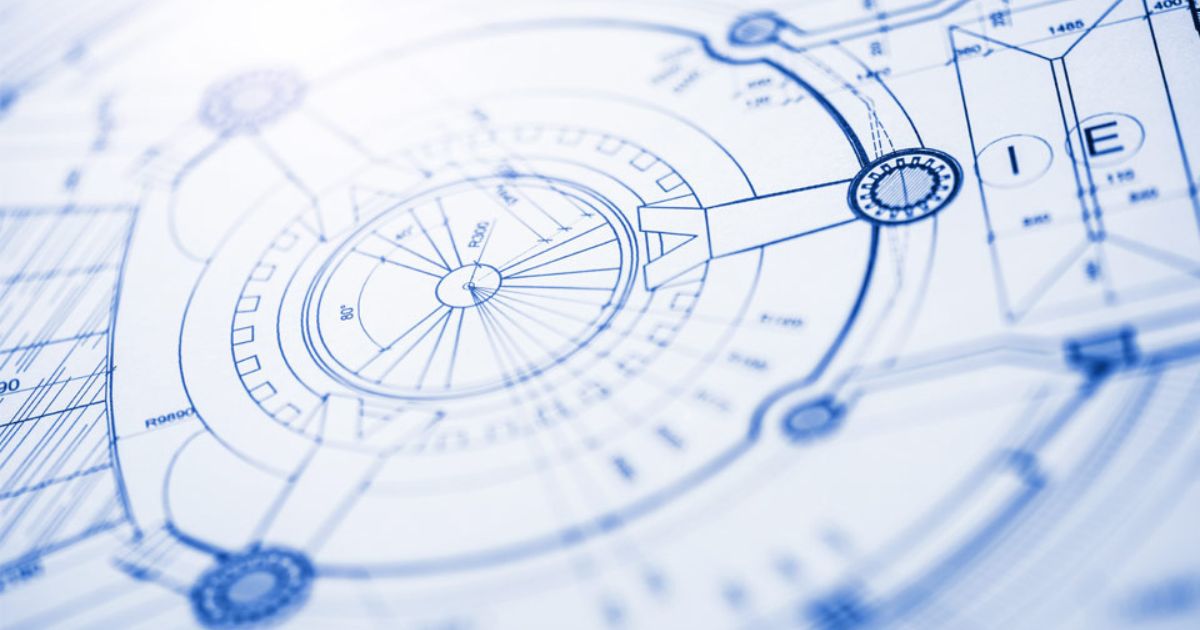
Every CAD model in a manufacturing organization is a compressed library of engineering intelligence. The geometry is the visible layer — the part shape, the assembly structure, the dimensional constraints. Beneath it is a rich layer of metadata and relationships: design intent, material specifications, manufacturing process constraints, change history, inspection criteria, BOM dependencies, and the accumulated engineering decisions of everyone who has worked on that part or assembly since the model was first created.
This intelligence is precisely what engineers, purchasing agents, manufacturing planners, and field service teams need to make good decisions — and it is almost entirely inaccessible to them. Not because it does not exist, but because CAD files are one of the most challenging data types in the enterprise to search. They are binary format files that standard search engines cannot read, stored across dozens of PLM systems and file repositories, and versioned through decades of engineering change orders in ways that make identifying the authoritative current model a genuine challenge.
The result is the most expensive inefficiency in manufacturing engineering: engineers who design and build parts that already exist, because they could not find the prior design. Research from Deloitte on manufacturing productivity consistently identifies design reuse failure as one of the highest-cost efficiency gaps in large manufacturing organizations.
The CAD Data Problem in Manufacturing Organizations
CAD models accumulate in large manufacturing organizations at a rate that quickly outpaces any manual management approach. Consider a single complex product program: the initial design generates hundreds or thousands of CAD models. Engineering changes over the program lifecycle generate additional versions of each. When the program ends or transitions, those models are archived — but rarely in a way that makes them easily findable for future programs that might benefit from reusing the designs.
Multiply this across decades of programs, multiple PLM system generations, and dozens of organizational units working in different CAD tools (AutoCAD, CATIA, Creo, NX, SolidWorks, Inventor, Revit, and more), and the result is a CAD library of extraordinary scope and equally extraordinary inaccessibility.
The specific problems this creates:
Design reuse failure. An engineer tasked with designing a new bracket, housing, or connector does not know whether a functionally equivalent component was designed and validated on a previous program. The search to find out is too difficult under project time pressure. The engineer designs from scratch — incurring the full cost of new design, validation, and qualification — for a part that already exists and could have been reused.
Version uncertainty. When a model is found, there is no reliable way to confirm it is the current authorized version without manually checking the PLM system of record — which may be a different system from the one where the model was found. Engineers and shop-floor workers using outdated specifications is a documented quality and safety risk in manufacturing.
Where-used blindness. When a component needs to be modified or replaced, understanding which assemblies and products use that component — the “where-used” relationship — is essential to managing the change impact. Without this visibility, changes are made without full understanding of their downstream consequences, creating risk of unintended effects on other products or programs.
Cross-system, cross-format fragmentation. CADnection can process about 95% of all CAD applications in use today, including AutoCAD, Catia, Creo, Inventor, Solidworks, NX, Revit and more. The fact that this breadth of format support is a noteworthy capability indicates how fragmented the typical large manufacturer’s CAD environment actually is.
The Solution: CAD Data Search Powered by CADnection + Sinequa
Sinequa has partnered with vdR Group, a leading engineering and manufacturing data management company with 35 years of experience in PLM and enterprise information management, to address this problem through an integration of vdR’s CADnection technology with Sinequa’s enterprise AI search platform.
CAD models are data-rich. They reflect intellectual property, design intent, spatial relationships, purchasing considerations, quality and inspection criteria, manufacturing processes, change history and much more. Sinequa’s integration with CADnection unlocks this information, making it fully usable, on its own or combined with other organizational knowledge.
How it works: CADnection acts as a data extraction and enrichment layer between raw CAD files and Sinequa’s search index. It processes CAD models across 95% of formats in use today, extracting the metadata and relationship data embedded within each model. Visual representations — both 2D drawings and 3D model views — are generated for browser-based viewing without requiring licensed CAD tools. The enriched data, viewables, and relationship maps are then passed to Sinequa’s enterprise AI search platform, where they become searchable alongside all other enterprise content — technical documentation, BOM data, PLM records, and engineering documentation — through a single natural language interface.
The result is a search experience where an engineer can query “find all previous designs of titanium aerospace fasteners with a load rating above 50kN” and receive results that span every program, every system, and every CAD format in the organization’s library — with 3D viewable models, version authentication, and where-used relationship context included in the results.
Three Use Cases That Drive Measurable Engineering Value
1. Design Reuse: Finding What Already Exists Before Building It
The economic case for design reuse in manufacturing is straightforward: a validated, qualified component that is reused costs a fraction of the engineering, testing, and qualification investment required for a new design. The barrier to design reuse has historically been discoverability — not capability. Engineers are entirely capable of reusing designs; they simply cannot find them in time.
With CADnection + Sinequa, engineers can search the organization’s full CAD library by geometry characteristics, metadata attributes, and semantic description simultaneously. A query about a specific part function surfaces all potentially reusable designs across every PLM system and format, with 3D viewables allowing rapid visual assessment without launching a CAD tool. The design that already exists and could be reused is no longer invisible.
Airbus deployed Sinequa’s enterprise AI platform across more than 700 engineers in aerospace design and manufacturing — an organization where design reuse at the component and sub-assembly level has direct impact on program cost and schedule. Alstom documented $46M in productivity value from AI-powered engineering knowledge workflows that include exactly this kind of design reuse enablement.
2. Version Control: Trusting That the Model You Found Is the Right One
Version uncertainty is a quality risk that manufacturing organizations manage at significant cost. CADnection’s authentication process verifies the current authorized version of each CAD model, and this version metadata is surfaced directly in Sinequa search results. Engineers and shop-floor workers accessing a component specification through the unified search interface see the current version, the version history, and the change order context — eliminating the ambiguity that currently leads teams to use outdated designs.
This is particularly important in change management scenarios where multiple versions of a component may coexist across a transition period, and where different production sites may be operating to different versions of the same specification.
3. Where-Used and Composed-Of: Understanding Change Impact Before Making Changes
The where-used relationship — knowing which assemblies, sub-assemblies, and products incorporate a given component — is fundamental to change management. Without it, design or specification changes to a component can have unintended downstream effects that are not discovered until production or, worse, in the field.
CADnection extracts and surfaces where-used and composed-of relationship data from CAD models and PLM systems, making these relationships searchable and visible in Sinequa’s interface. An engineer assessing the impact of modifying a component can immediately see every assembly that uses it, every product that contains those assemblies, and the relevant change history — before making the modification, not after discovering the consequences.
CAD Search in the Broader AI Manufacturing Strategy
The CAD data accessibility problem is a subset of the broader digital thread challenge in manufacturing — the aspiration to maintain a connected information flow across the full product lifecycle from design through manufacturing to service. A digital thread that cannot be searched is a digital thread that cannot be used.
Sinequa was recognized by Gartner in the 2024 Hype Cycle for Advanced Technologies for Manufacturing specifically in the “GenAI for Product Life Cycle” category — validating the role that AI-powered search and RAG capabilities play in making the product lifecycle knowledge environment accessible and actionable. CAD data search is the foundation layer of that vision: before AI can synthesize engineering intelligence across the product lifecycle, that intelligence must be accessible.
The integration of CADnection’s CAD extraction and enrichment with Sinequa’s enterprise AI search platform and advanced RAG capabilities creates the foundation for the next generation of engineering AI: AI assistants that can answer questions about product designs by synthesizing across CAD metadata, technical documentation, and engineering history simultaneously.
See how Sinequa powers Engineering and Design
Get a DemoShare