











 Assistant
Engineering the Future: Key Insights from CIMdata PLM Road Map & PDT North America 2026
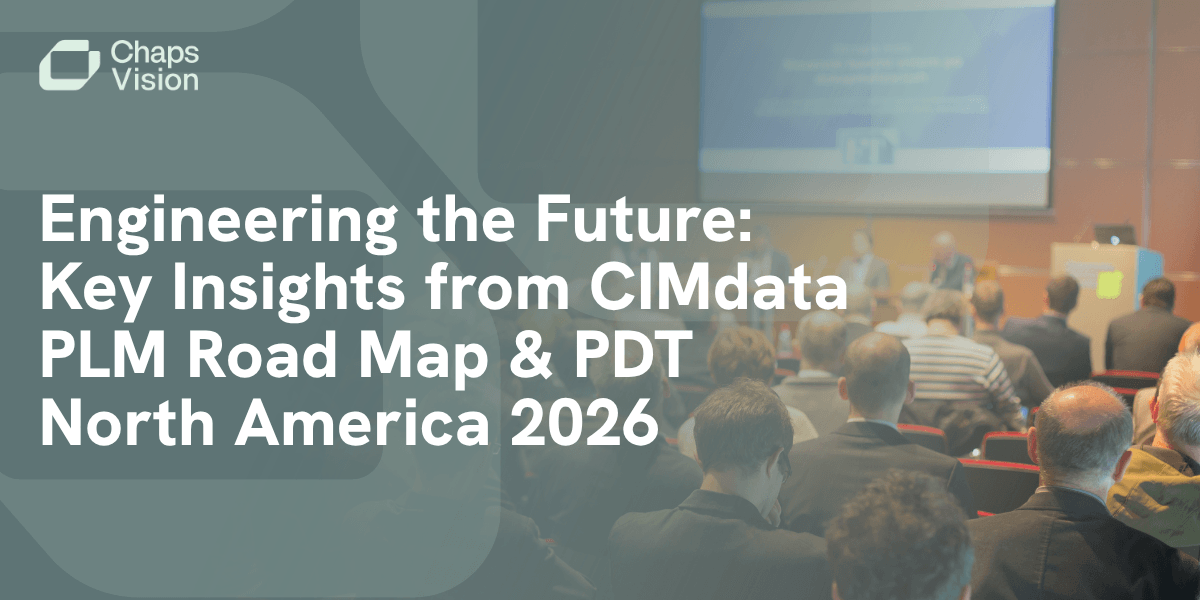
The CIMdata PLM Road Map & PDT North America 2026 conference earlier this month left the industry with a clear message: the honeymoon phase of AI hype is over. The focus has shifted from “What is AI?” to “How do we build the data foundation to make AI work?”
From aerospace giants to industrial leaders, the consensus was that Product Lifecycle Management (PLM) is no longer just a repository for CAD files; it has become an essential feeder into the essential “brain” or “knowledge layer” for the next era of intelligent manufacturing.
Here are the key highlights and strategic takeaways from the event’s most influential sessions.
Read CIMdata’s commentary on this here
Moving Beyond the Hype: The PLM Tipping Point
Peter Bilello (President & CEO, CIMdata) opened the conference by addressing the elephant in the room: AI has been in PLM for years, but generative AI has created a new disruptive power. Bilello emphasized that the task for PLM professionals today is to convert this disruption into enterprise value.
The “tipping point” isn’t about the AI tools themselves, but our ability to use big data within PLM to deliver actionable insights. His message was clear. AI will only reach its potential when it is managed as a core component of the product lifecycle, rather than a bolt-on novelty.
Boeing Discusses AI in the Real World
Vishwa Uddanwadiker (Chief AI Officer for Engineering, Test & Technology, The Boeing Company) discussed how his company is bringing AI for uses cases grounded in physical reality. Boeing isn’t just experimenting. They are deploying AI across the board:
- On the Tarmac: AI-driven auto-taxi and “Safe Runway” hazard detection.
- On the Factory Floor: Computer vision tools for part verification and defect detection, significantly reducing rework.
- In the Office: AI assistants that streamline complex workflows and corrective action planning.
Uddanwadiker stressed that for a company like Boeing, safety assurance is the north star. AI must be explainable, certifiable, and developed in collaboration with regulators.
NEW Report
The State of Enterprise Agentic AI in 2026 – Agentic Reality Check: Hype or Not?
Beyond the Silicon Valley narrative, what does agentic AI truly look like inside a $5B+ revenue organization? This research explores the gap between “Agent-Washing” and the realities of deploying agents in complex, regulated, and legacy-heavy environments.
Cummins’ Foundation-First Approach for Building an AI “Brain”
Perhaps the most pragmatic session came from Scott Beard (Principal Technical Architect, Cummins Inc.). Beard argued that companies don’t lack AI tools; they lack “connected product knowledge.”
Instead of starting with flashy chat interfaces, Cummins focused on engineering a governed knowledge layer. Scott explained that Cummins is leveraging the Digital thread, building the brain first by indexing and connecting product artifacts across PLM and adjacent systems to create a unified knowledge layer.
By treating AI readiness with the same rigor as product development, Cummins is moving away from “isolated pilots” toward a scalable, durable capability.
Cummins Builds a Knowledge Fabric with Sinequa
Read the case studyOperationalizing the Digital Thread for Agentic AI
Jeff Evernham (Head of Innovation, ChapsVision Americas) tackled a persistent pain point: engineering professionals spend up to 20% of their time just searching for information. Building from Scott Beard’s presentation, Evernham presented a framework to turn the Digital Thread from a “passive data framework” into an active system of intelligence.
The goal is to enable agentic AI – systems that can reason across PLM, CAD, ERP and other data to provide accurate, actionable insights and actions, rather than just returning search results.
Takeaways for PLM and Manufacturing Leaders
A few themes and takeaways emerged from these and other sessions at the conference:
- Data Architectures over Features: Stop chasing AI features and the next capability. Start building a knowledge layer if you want to capture real value.
- Governance is crucial: Treat AI as an “employee” that requires accountability, traceability, and governance.
- A cultural shift must follow: PLM failure is rarely a software issue; it’s usually a lack of process integration and leadership alignment.
As several speakers noted, AI won’t fix a broken process; it will only automate and amplify dysfunction. The roadmap for 2026 is clear: prioritize your data, connect your systems, and build your digital foundation. Only then can AI truly move the needle.
Are you prioritizing your data foundation or your AI tools in 2026?
See Enterprise Agentic AI in action
Request a demoShare